As the use of artificial intelligence (AI) becomes ubiquitous, it is increasingly shaping how organisations design and deliver emergency response exercises. From scenario generation and inject development to documentation and analysis, AI is opening new possibilities for faster, more scalable, and more structured exercise design.

As the use of artificial intelligence becomes ubiquitous, it is increasingly shaping how organisations design and deliver emergency response exercises. From scenario generation and inject development to documentation and analysis, AI is opening new possibilities for faster, more scalable, and more structured exercise design.
For practitioners in emergency preparedness and crisis response, this represents a significant shift. Tasks that once required extensive time and coordination can now be supported or accelerated by AI tools, enabling designers to focus more attention on shaping objectives, refining realism, and enhancing learning outcomes.
At its core, exercise design is evolving from a largely manual process into a hybrid discipline – one where technology enhances capability, and human experience provides direction.
This creates an important opportunity: to rethink not only how exercises are built, but what makes them effective in the first place. While AI can generate scenarios at scale, it is human experience that ensures those scenarios remain meaningful, operationally relevant, and capable of instilling real-world decision-making capacity.
The value AI can provide across multiple dimensions of exercise development is apparent. When shaped by deliberate and well-considered prompting, it can rapidly generate:
This enables exercise teams to explore complexity at a scale that was previously difficult to achieve within limited time frames. For instance, an offshore spill scenario can be quickly expanded to incorporate environmental impacts, regulatory escalation, media scrutiny, supply chain disruption, and concurrent operational challenges.
What once required multiple iterations across subject matter experts can now be produced as a strong foundational layer within hours.
This represents a meaningful shift: AI does not replace exercise design – it accelerates it.
As AI reduces the time required to build scenarios, the opportunity shifts towards improving quality.
Designers are now able to spend more time on:
This is where the value of experience becomes even more important – exercise effectiveness is not determined by the contents generated, but how well these reflect complex operational realities and support meaningful learning.
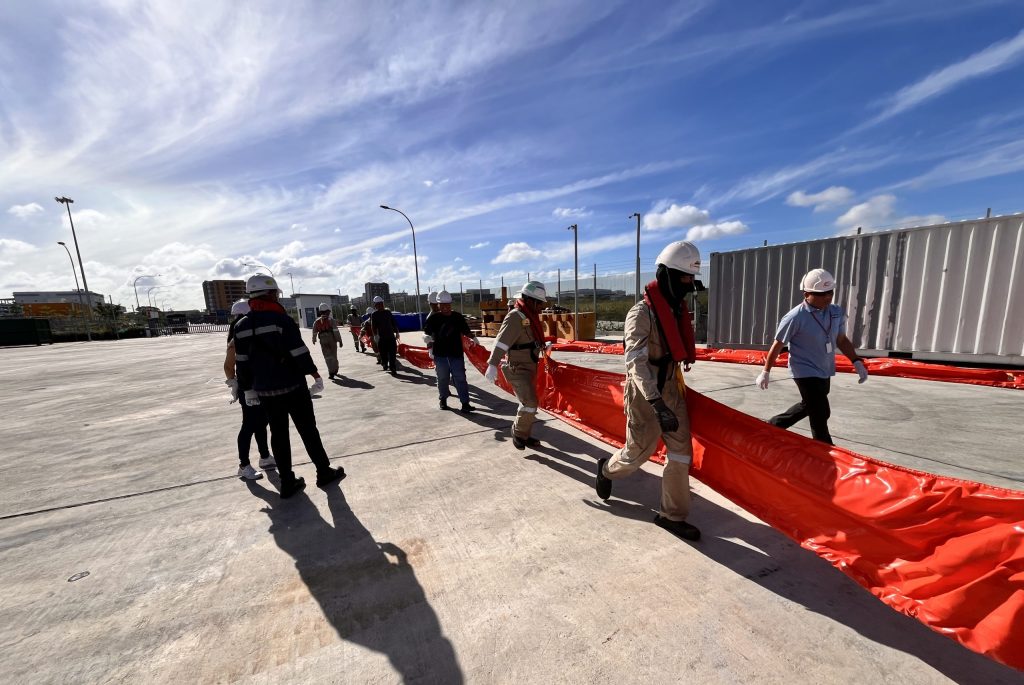
Experienced practitioners bring something AI cannot replicate: operational judgement shaped by lived experience.
They understand:
Such insights, accumulated over years of operational exposure and observation, are rarely fully documented.
AI can construct complexity, but human experience determines relevance – this is what allows seasoned designers to move beyond “plausible scenarios” and create learning environments that feel operationally real.
A key framework that helps explain expert behaviour under pressure is ‘Recognition-Primed Decision Making (RPD)’, developed by cognitive psychologist Gary Klein.
RPD challenges assumptions that decision-makers systematically compare multiple options before selecting the best one. Instead, it shows that experienced professionals often:
This process is not based on abstract analysis alone. It is grounded in experience-rich mental models built through repeated exposure to real-world situations.
Recognition-Primed Decision Making is not unique to emergency management. It is consistently observed across professions where decisions must be made quickly, under uncertainty, and with significant consequences. Examples include:
🚒 Fire and Rescue Services
Incident commanders rely heavily on prior incident experience to anticipate fire behaviour, assess risk, and select tactics rapidly in dynamic environments.
✈️ Aviation
Pilots use experience-based judgement during abnormal situations, drawing on training and past exposure to similar events to guide safe and immediate responses.
🏥 Emergency Medicine
Clinicians in emergency departments often make rapid diagnostic and treatment decisions based on symptom recognition informed by extensive clinical experience.
⚔️ Military Operations
Military leaders operate in highly fluid environments where decisions must be made with incomplete information and shifting priorities, relying heavily on prior operational exposure.
🚢 Maritime and Offshore Response
Incident managers responding to oil spills or offshore emergencies draw on past incidents to guide coordination, prioritisation, and resource deployment under pressure.
Across all these domains, one principle is consistent:
Experience accelerates judgement and improves decision quality.
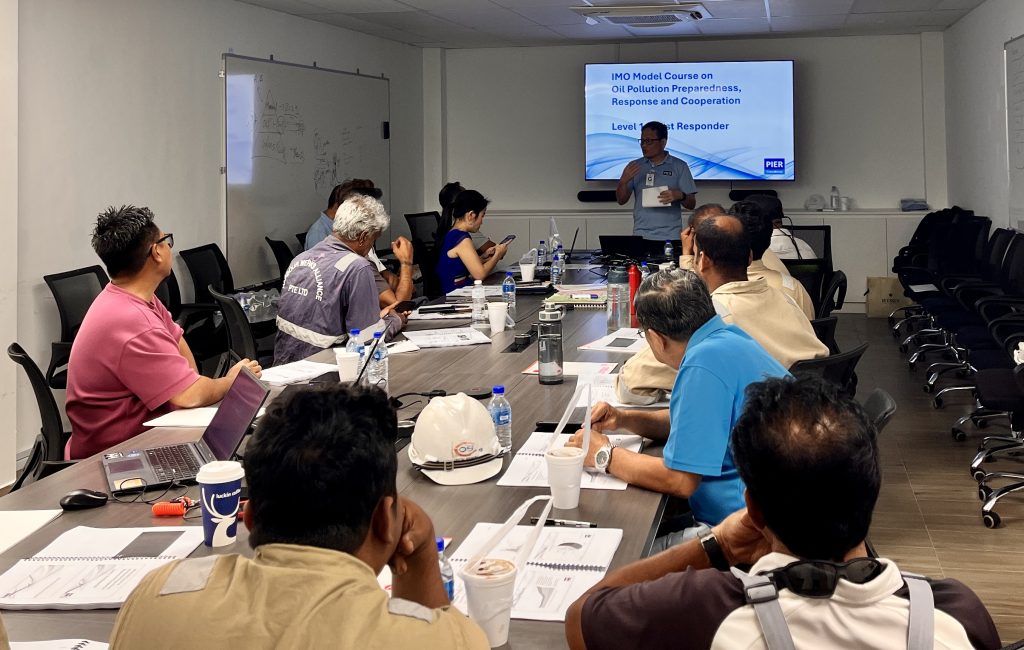
Real-world incidents are rarely driven by events alone – they are shaped by both hazard and response-generated demands.
Within response-generated demands, those created by respective agents -the continuous flow of requests, decisions, and coordination requirements created by responders themselves- can become more complex than the original incident.
These include:
Experienced designers understand how these dynamics may unfold and could design exercises that intentionally replicate them. AI can simulate interactions, but human experience is required to ensure they reflect how organisations function under pressure.
The future of exercise design is not about choosing between AI and human expertise; it is about combining them effectively.
AI provides:
Human experience provides:
Together, they create a more powerful design capability than either could achieve alone.
The most effective approach is simple:
Use AI to expand possibilities.
Use experience to define value.
As AI becomes embedded in preparedness programmes, there is a parallel opportunity that should not be overlooked – the capture and preservation of expert knowledge.
It would be argued that the most valuable insights in emergency response exists tacitly within individuals – controllers, responders, planners, and leaders who have accumulated decades of experience. Organisations should actively:
AI can then be used to scale and apply this knowledge more effectively across exercise programmes. In this way, technology becomes a mechanism for amplifying expertise rather than replacing it.
AI is transforming exercise design in powerful and practical ways, making it faster, more scalable, and more accessible.
But the effectiveness of an exercise still depends on something more fundamental:
Human experience.
Experience ensures that scenarios are realistic.
Experience ensures that decisions are meaningful.
Experience ensures that learning is relevant.
The future of exercise design will not be defined by how advanced the technology becomes; it will be defined by how well organisations integrate that technology with the deep operational experience that already exists within their teams.
Because ultimately:
AI can generate exercises.
But only experience can make them matter.
👉 The next step in exercise design is clear: pairing AI capability with the depth of human experience.
👉 Let us connect to explore how AI and practitioner experience can work together to strengthen preparedness.
We help organisations strengthen their emergency preparedness through tailored contingency plans, realistic exercises and practical response solutions — helping teams know what to do, when to act and how to respond effectively when it matters most.