From 9 to 12 Feb 2026, PIER Consultancy Pte Ltd delivered a specialized IMO Model Course Level 1 Oil Spill Response program for Crystal Offshore Pte Ltd (COS).
Built upon the International Maritime Organization’s 2019 revised guidelines, this four-day intensive wasn’t just a classroom exercise; it was a deep dive into the evolving science of emergency readiness.

The alarm on the bridge isn’t just a sound; it’s the heartbeat of a looming crisis. When oil hits the water, the transition from routine operations to a high-stakes emergency happens in a heartbeat. In the chaos of an initial breach, luck is a failing strategy. The outcome is dictated solely by the depth of a team’s preparation and their ability to execute under pressure. In today’s maritime landscape, “preparedness” has moved beyond regulatory box-ticking—it is the ultimate benchmark of responsible, resilient operations.
The following five insights, forged on the frontlines of this training, highlight why modern response requires a sophisticated synthesis of technical mastery, logistical foresight, and strategic discipline.
The first rule of the frontline is that oil is never static. As explored in Module 1 of the course, oil is a dynamic substance that undergoes complex physical and chemical “weathering” the moment it enters the marine environment. Responders aren’t fighting a liquid; they are fighting an evolving event that spreads, emulsifies, and interacts with wind, waves, and currents. Understanding this “personality”—the fate and behavior of the spill—is the non-negotiable first step in selecting the right equipment.
However, technical strategy is worthless if the responders themselves are compromised. Health and Safety (H&S) formed the central nervous system of this module. A response is an objective failure if a responder is injured. By utilizing specific risk assessment techniques and hazard identification for hydrocarbons and chemical exposure, the training grounded every operational decision in the reality of personnel safety.
“There is a deep interconnectedness between operational decisions and environmental outcomes.”
The “fate” of the oil dictates whether a boom will hold or whether a skimmer will be rendered useless by changing viscosity. If you don’t understand the physics, you can’t manage the risk.
Efficiency in a crisis demands a rejection of “one-size-fits-all” training. For the COS delivery, the standard IMO Level 1 curriculum was aggressively contextualized to match the participants’ actual operational profile. Since the attendees were professional mariners primarily deployed for at-sea response, the program streamlined shoreline assessment modules to make room for enhanced at-sea equipment deployment and offshore maneuvers.
This shift toward “Operational Realism” ensured that mariners mastered the specific tools and sea-states they will actually face. By incorporating elements from IMO Levels 2 and 3—such as media relations and compensation frameworks—the course moved beyond basic task-handling. It equipped responders to understand the broader strategic mission, ensuring every tactical action at sea aligns with the organization’s high-level objectives.

The use of chemical dispersants is rarely a simple “yes/no” decision; it is a calculation of trade-offs. Module 2 emphasized that dispersants are a strategic tool whose effectiveness is tethered to oil type, sea state, and environmental sensitivity.
In the strategist’s view, this is the application of Net Environmental Benefit Analysis (NEBA). Using dispersants often means making the difficult choice to move the problem from the surface—where it threatens birds and coastlines—into the water column, where it may impact fish and reefs. There are no perfect solutions in an oil spill, only “least-worst” options. Success lies in the ability of the response team to evaluate these trade-offs in real-time, matching the intervention to the logistical realities of the sea.
A response operation is only as good as its waste management plan. Recovering oil from the ocean is only half the battle; the other half is ensuring that recovered waste doesn’t become a “secondary spill”. Module 3 of the course addressed the massive logistical challenge of segregation, temporary storage, and transportation of contaminated materials.
From a strategic standpoint, waste segregation is a financial imperative as much as an environmental one. In the maritime world, mixing oily waste with general debris can triple or quadruple disposal costs and complicate the entire chain of custody. A response hasn’t truly succeeded until the waste is safely disposed of and the equipment is demobilized, cleaned, and documented. Logistics is the spine that supports the entire tactical operation.
In an era of instant media and global scrutiny, tactical responders must understand that their clipboards are as important as their booms. By incorporating lessons on the International Compensation Regime, the COS program highlighted a critical truth: documentation is the currency of recovery.
Responders who fail to track costs, document operational sequences, and maintain accurate logs jeopardize the organization’s ability to claim compensation under the global liability framework. Furthermore, as responders are often the first point of contact for external observers, understanding message discipline is a frontline necessity.
“In today’s environment of rapid information flow and media scrutiny, clear, accurate and coordinated communication is essential.”
Organizational credibility is just as vulnerable as the environment during an incident. Protecting that credibility requires responders who understand that their actions are part of a larger legal and public narrative.
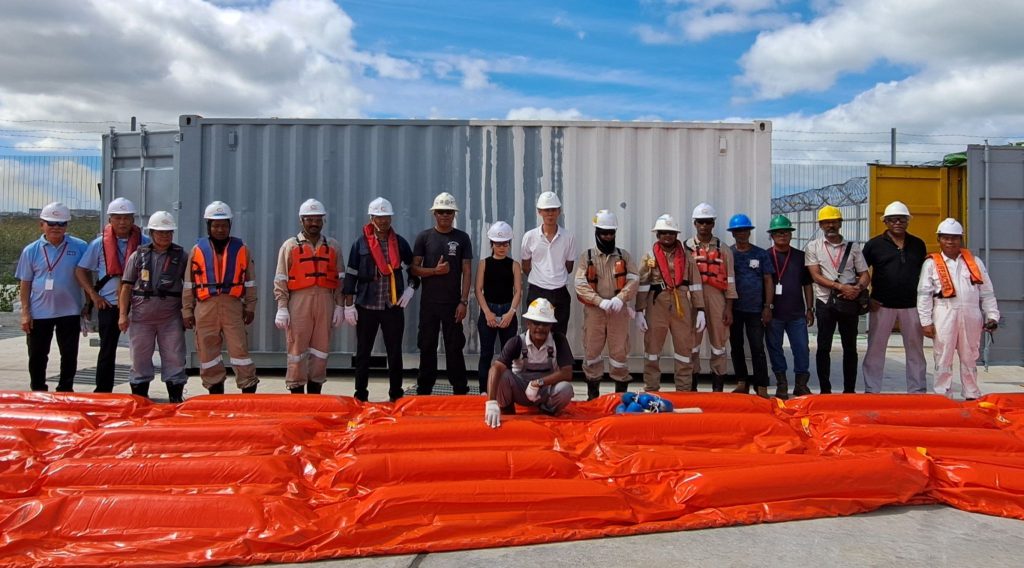
The successful completion of the IMO Level 1 program by COS on 12 February 2026 marks more than just a training milestone; it represents a commitment to a higher standard of maritime excellence. PIER Consultancy remains dedicated to ensuring that when the crisis comes, the response is grounded in standards-based instruction and real-world application.
“As maritime activities continue to expand and environmental expectations grow, preparedness remains a critical pillar of responsible operations.”
The complexity of modern maritime emergencies demands more than a fast reaction—it requires a deep, technical readiness that bridges the gap between the deck and the boardroom. When the sheen is spotted and the pressure rises, the question remains: Is your team trained for the theory of the event, or the reality of the response?
We help organisations strengthen their emergency preparedness through tailored contingency plans, realistic exercises and practical response solutions — helping teams know what to do, when to act and how to respond effectively when it matters most.